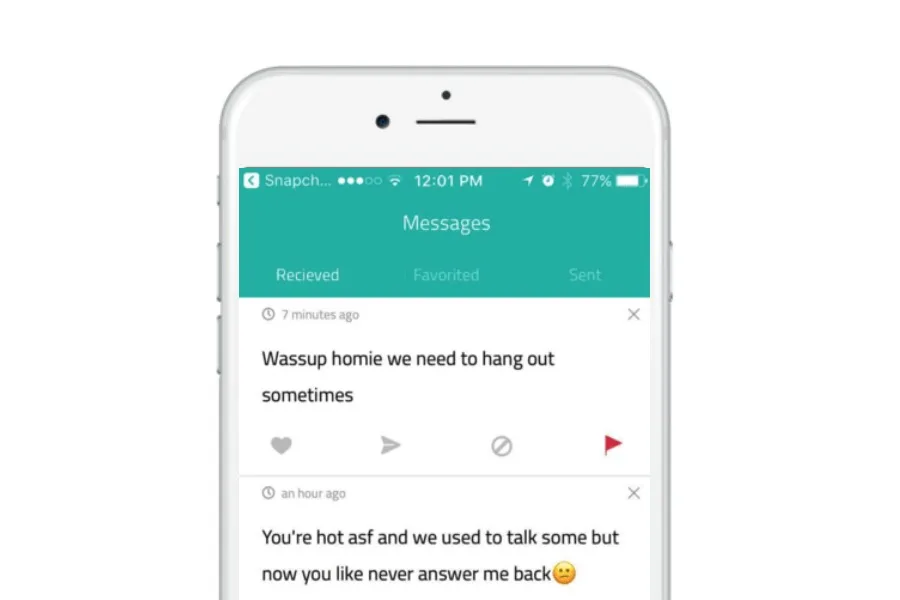
The number one concern we hear from parents when it comes to kids and their devices is online bullying. Which is why we think you're going to want to know about the new Sarahah app.
This personal bulletin board app has blown up all around the world, with a whopping18 million downloads and counting. But it can be dangerous territory for kids, since all comments left here are written anonymously.
Does this sound like a great way to get honest feedback -- or a bullying disaster waiting to happen? Here's what we think you should know. -Kate + Liz
What is the Sarahah app?
Sarahah comes from the Arabic word for "frankness" or "honesty." It was recently the top downloaded free app in the entire App Store and shows few signs of slowing down. The app was designed to allow users have their own personal bulletin board, where anyone at all -- even if they're not logged into Sarahah -- can leave an anonymous message, though users have the choice to tag their identity or not. You can't follow anyone, though you can keep track of comments you receive, send or favorite. Originally, it was created to give employees a way to leave constructive criticism for their bosses without worrying about their jobs, but now teens are using it to compliment each other's hairstyles, ship their friends, or just leave completely random thoughts. At best.What are the bullying concerns with the Sarahah app?
Of course, due to the fact that all comments on the Sarahah app are anonymous, this is fertile ground for bullying. I mean, have you ever looked at the comment section on Urban Baby? How about YouTube? Instagram? Any blog, magazine or newspaper comment section? Of course we all already know the worst that the anonymity of the internet can bring. And that's just with adults.Related: The Blue Whale Suicide Game: Real or internet hoax?
It's giving some of us flashbacks to the days of slam books out of Judy Blume novels. Although with a slam book, at least we could narrow down who in the room might have written that our hair was frizzy and our boobs were lopsided. (That is, if we couldn't immediately identify their handwriting.) With Sarahah there is literally no accountability whatsoever. Inverse calls it "essentially little more than an open inbox" and while you can't respond to messages directly, you can share a response through other social channels, or even link your posts to a Snapchat account now. This makes a user less anonymous, though not the commenters. And while your teen may be incredibly responsible with their use of social media, it's important to know that bullying is wildly prevalent and this is just one more form factor. According to the Megan Meier Foundation which was founded to stop bullying and cyberbullying, research shows that more than one-third of students have reported experiencing cyberbullying; and peer victimization has lead to increased issues with mental health and even an increase in suicide rates. That's serious.Related: How to talk about safety with kids: Why we talk about tricky people and not stranger danger.
What about privacy concerns with the Sarahah app?
One of the biggest scandals about Sarahah right now has nothing to do with bullying at all. It was recently revealed that Sarahah has secretly been uploading all the email and phone numbers from Android address books without asking permission first. In fact, it was only discovered thanks to an analyst with monitoring software installed on his device -- something kids aren't likely to have. However this does mean that if if you know anyone at all who has your phone number or contact info stored on an Android device, and they're one of the 18 million people using Sarahah, then your own private information has likely been breached. According to the Sarahah terms of service and privacy statement, they state they won't "sell, trade, rent or disclose any information to any third party" -- but honestly, it's a pretty thin privacy statement for a social app and it does give us pause.Related: The one big issue with the Snapchat Snap Map feature that no one's discussing -- but should