Issues concerning civil rights and racial justice in America have never stopped being news. At least if you're paying attention. However over the past few years, they've really become front and center in a more widespread way, thanks to the Black Lives Matter movement -- and most recently, the national discussion about NFL athletes' right to use their platforms to to peacefully protest institutionalized racism and brutality against people of color by taking a knee during the National Anthem, until "the land of the free" promise holds true for all of us.
If you're a family of color, having this conversation goes without saying. Lives are literally on the line. It's my white friends however, who seem to shy away from the issue, sometimes because they don't want to make waves (please! Make waves!), and sometimes because they simply don't know where to start with their kids.
The short answer: As with all issues, you start talking...by talking.
And if you need a little help, turn to Langston Hughes.
Related: 15 amazing Langston Hughes quotes to help start important conversations with your kids.
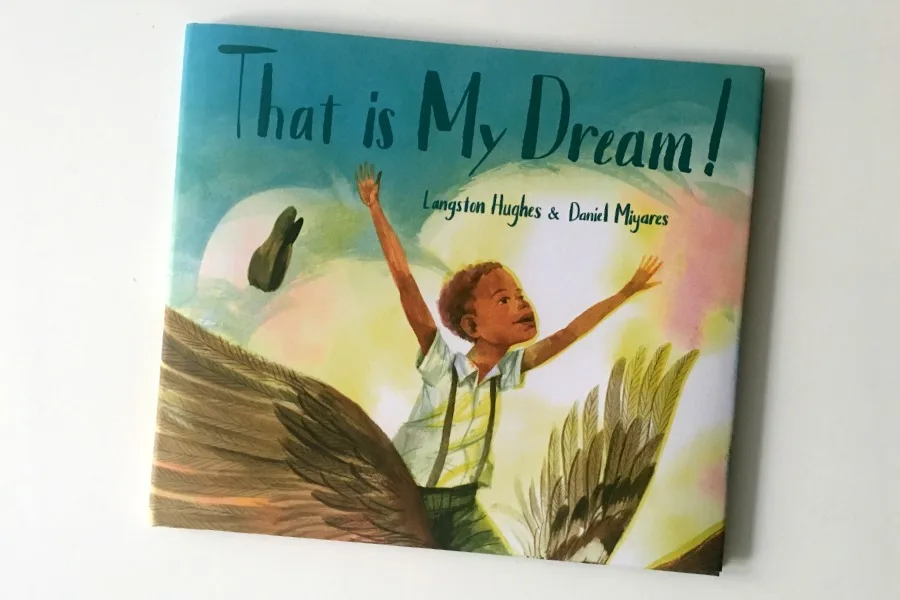
In the most perfect timing, I just received the wonderful, important new children's picture book, That Is My Dream! which introduces kids to Hughes' Dream Variations, his 1926 poem about historic racial discrimination and his dream of a world free of it.
The way the poem is brought to life in this book -- just a few words on each page, all gorgeously illustrated with dreamy, uplifting watercolors by Daniel Miyare -- you'd never know it wasn't written just for children.
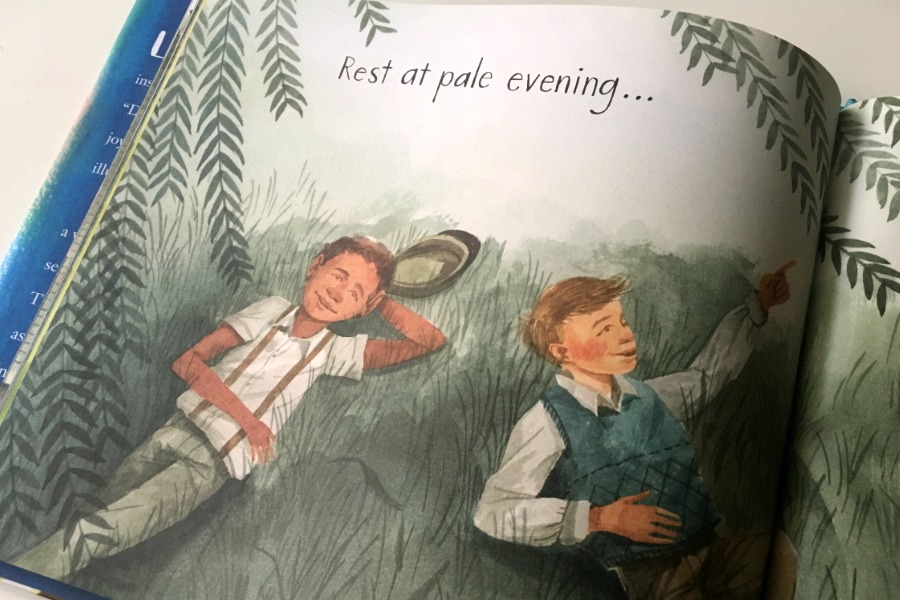 The story depicts a young boy, and while his clothing and environment clearly point to an earlier time, he still feels remarkably contemporary and relatable, even for kids today who aren't wearing suspenders and sweater vests with collars.
Which is why it may come as a shock to some children, as you point out that as the boy goes through his day, we notice he's sitting in the back of the bus, walking separately on the street from white children, and most strikingly, drinking at a water fountain marked "colored only."
The story depicts a young boy, and while his clothing and environment clearly point to an earlier time, he still feels remarkably contemporary and relatable, even for kids today who aren't wearing suspenders and sweater vests with collars.
Which is why it may come as a shock to some children, as you point out that as the boy goes through his day, we notice he's sitting in the back of the bus, walking separately on the street from white children, and most strikingly, drinking at a water fountain marked "colored only."
 Let your children lead the way with their own questions. They always have the best ones.
Pre-order That Is My Dream! by Langston Hughes and Daniel Miyares on our affiliate Amazon, or look for it in your local indie bookstore and make sure your library carries it. This one should be on shelves everywhere.
Let your children lead the way with their own questions. They always have the best ones.
Pre-order That Is My Dream! by Langston Hughes and Daniel Miyares on our affiliate Amazon, or look for it in your local indie bookstore and make sure your library carries it. This one should be on shelves everywhere.
The story depicts a young boy, and while his clothing and environment clearly point to an earlier time, he still feels remarkably contemporary and relatable, even for kids today who aren't wearing suspenders and sweater vests with collars.
Which is why it may come as a shock to some children, as you point out that as the boy goes through his day, we notice he's sitting in the back of the bus, walking separately on the street from white children, and most strikingly, drinking at a water fountain marked "colored only."
Related: What did Frederick Douglass do? This picture book helps kids find out.
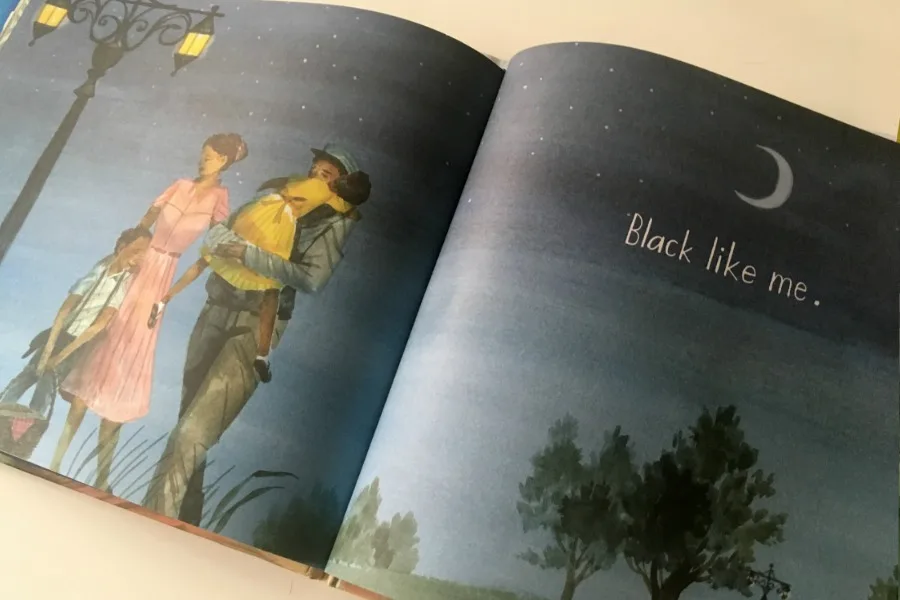
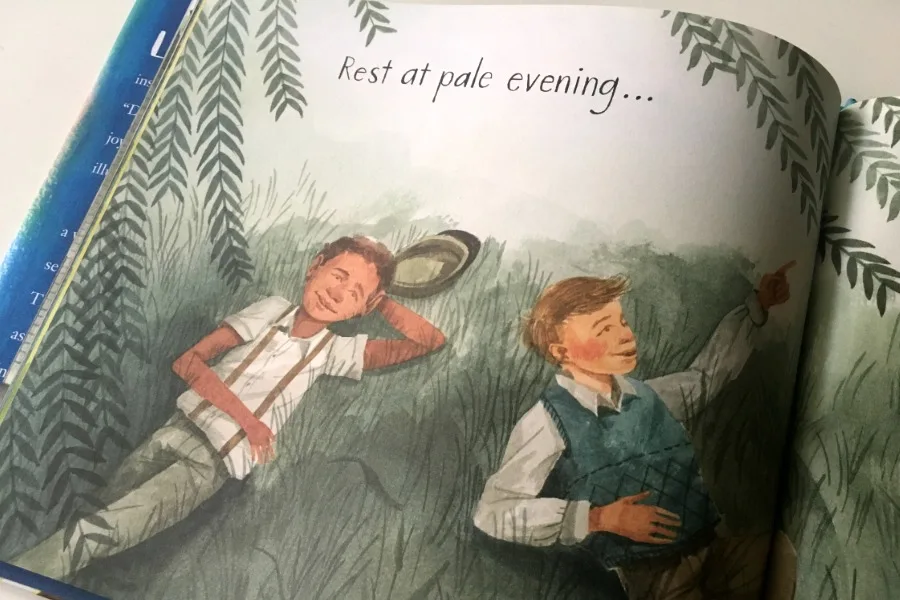
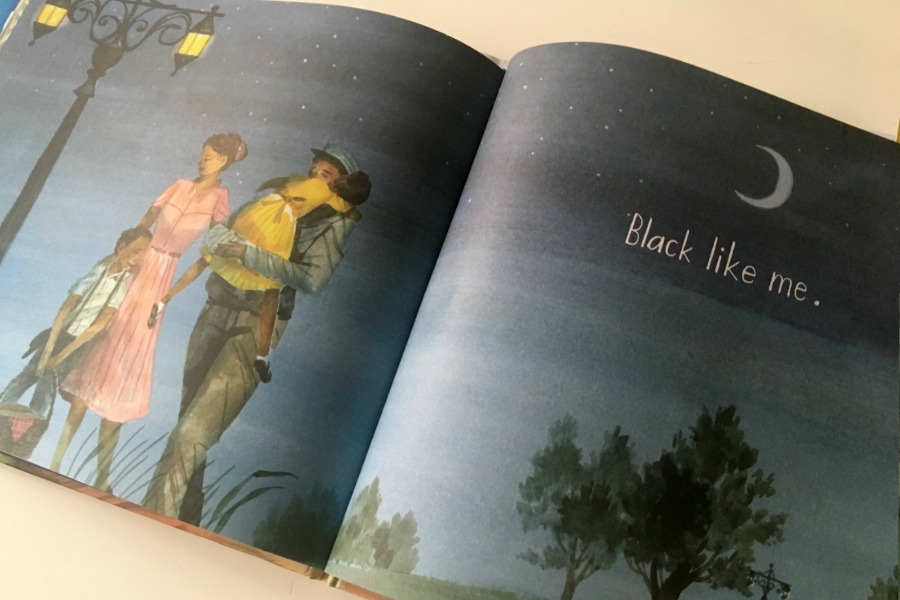
It's the perfect set-up for a discussion about what would be different if this boy was living in America today -- and what would be the same. The exuberant second half of the book illustrates the boy's timeless hopes and dreams. They're simple pleasures, like dancing in a field arm-in-arm with other children, drinking out of a brook with a (white) friend, enjoying the shade of a tree, playing outside until the stars come out. But, ask your kids: can we all take these small joys for granted? However it's the final line about Night coming tenderly / Black like me that will really allow for some amazing discussions about just what the author means, and why he'd feel pride in the color of his skin even as he is clearly held back by it.
Let your children lead the way with their own questions. They always have the best ones.
Pre-order That Is My Dream! by Langston Hughes and Daniel Miyares on our affiliate Amazon, or look for it in your local indie bookstore and make sure your library carries it. This one should be on shelves everywhere.