Q: I’m looking for good resources for talking to my 11- and 12-year-olds about the presidential election, like candidate platforms that are kid-friendly reads. - Monica, via our Spawned Podcast Community.
A: Well, this certainly sent me down an enjoyable rabbit hole as a political junkie! And I'm so happy with what I was able to put together here. Especially because after searching for "best presidential election resources for kids" I found a lot of...well, not very good resources. (But hey, bonus points for good SEO?)
Fortunately I did manage to find some great resources for teaching kids about this November's important election.
And TBH, with so much going on in politics right now that is (ahem) decidedly not altogether kid-friendly, it was just nice to find websites and online tools that focus on general election information, platforms and positions, and election history, without getting into the more tawdry stuff that we're unfortunately mired in these days.
So for your tweens and even teens, here are some terrific resources and websites that cover the election basics, or even go a little deeper.
And as with all subjects, if there's a new-to-them-topic that seems to spark your kid's interest -- Women's suffrage? DACA? Gerrymandering? -- feel free to share the laptop and do some searching together. - Liz
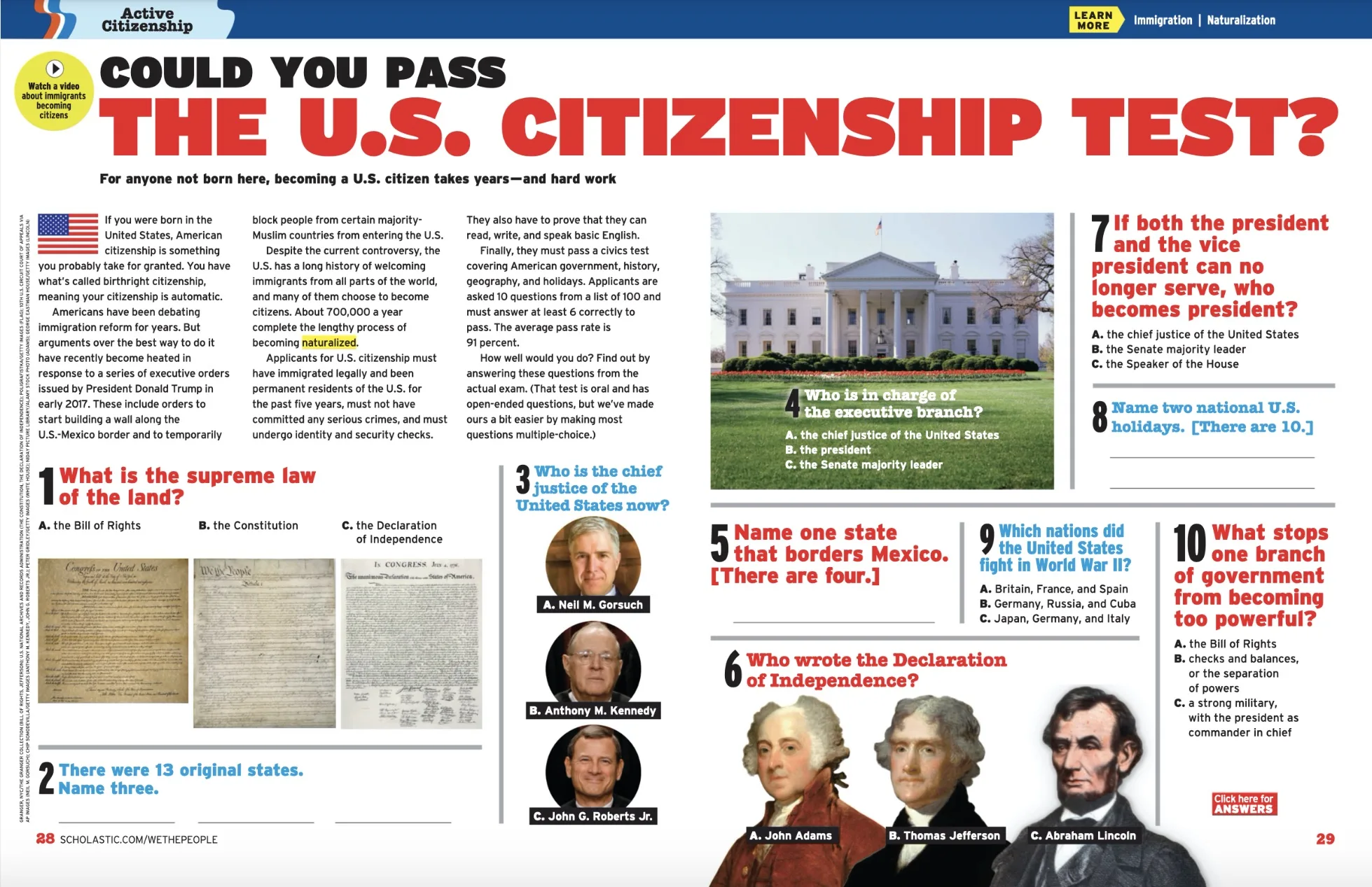
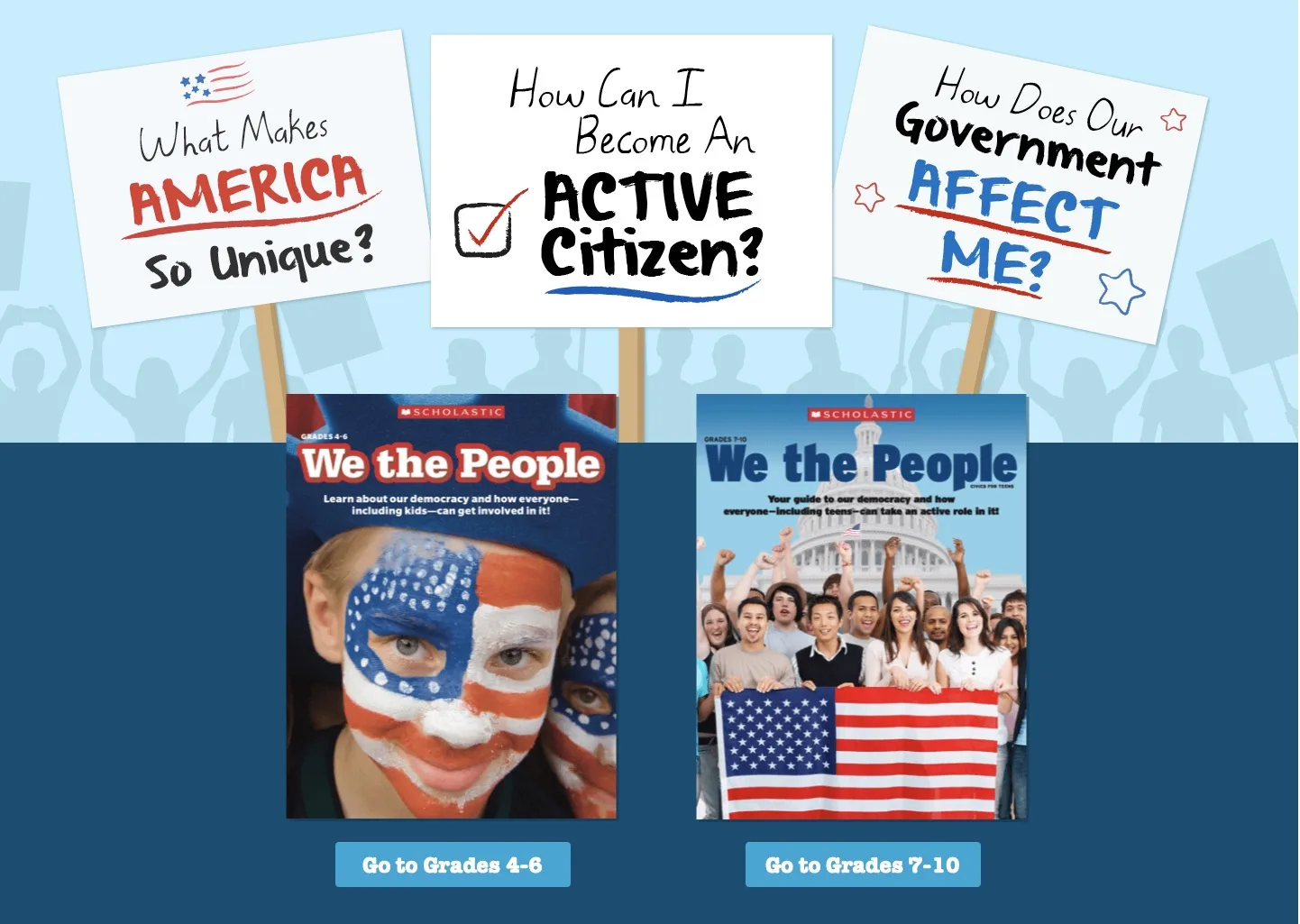
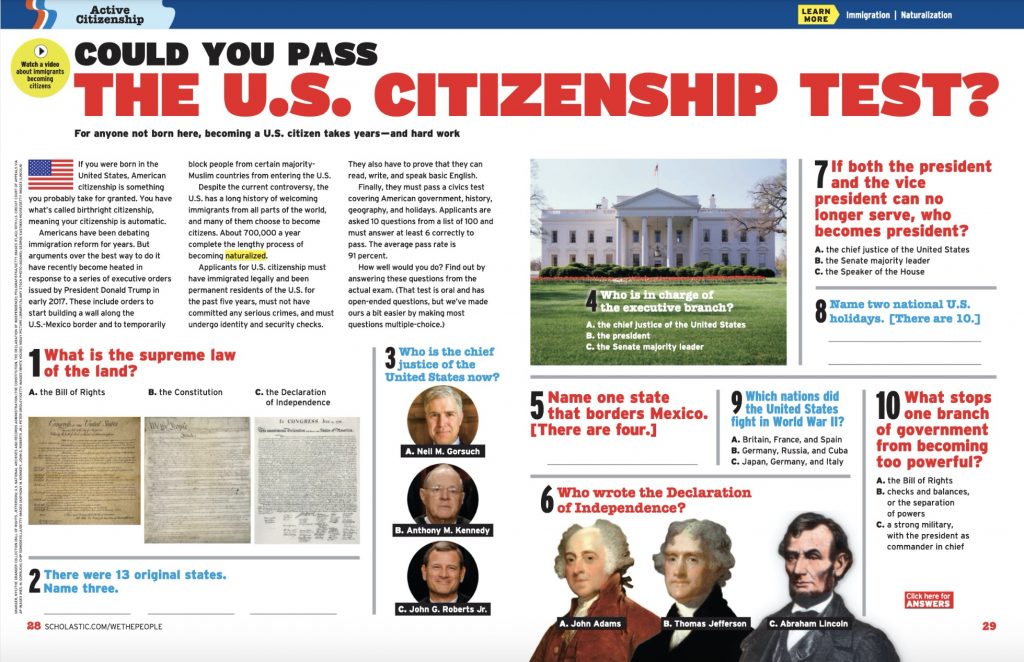 4. Scholastic/We The People Scholastic's website offers some interesting general info about elections for kids by age (grades 4-6 and grades 7-10), as well as lesson plans that parents can tap into. For older kids, don't miss the media literacy and understanding government content, which include topics like The Real Dal on Fake News, Supreme Court Cases Every Teen Should Know, and 10 sample questions from the US citizenship test (above).
I also have it on good authority that they are going to be adding some more incredible content any day now, so we will keep you posted on that.
5. PBS Thirteen Election Central: Leave it to PBS to put together a stellar "Election Collection" including info on campaigns, the Party system, voting rights, media literacy, current issues and debate toolkits. While it's made for educators, parents will love that there is so much here! Be sure to take a look at the KQED Youth Media Challenge: Let's Talk About Election 2020 and the interactive Electoral Decoder.
While you're there, also look at some of the related videos; I love the video on confirmation bias and why your brain is designed to love fake news.
6. For comparing platforms, Reuters Graphic: How the candidates compare on key issues is one of the cleanest, most concise graphics I've found, making it perfect for kids.
One big caveat though: It's entirely missing key issues for voters like LGBTQ+ equality, women's access to healthcare, college loan forgiveness, hate crime legislation, Supreme Court appointments, and gun law reform -- the latter of which is of particular interest to students growing up in an age of lockdown drills. However the comparison chart does cover issues often missing in other similar tools, like reparations, support for HBCUs, and specific green investment proposals.
7. For another option, check out The National Education Association Issue Comparison Tool which is excellent, though not at all unbiased. (Full disclosure: There is a "join Educators for Joe" form at the bottom.) However the page does offer concise, helpful comparisons of the two candidates' positions on issues that may be of interest to kids, like public school funding, school safety, racial/social justice, and Covid-related school re-opening proposals -- topics most kids will find more interesting than say, corporate tax code changes or foreign trade regulations.
The positions listed here on both sides are well-sourced, and allow you to click through to other trusted media resources for more info, including Vote Smart, Reuters, The NY Times, The Washington Post, Vox, and official White House statements.
Keep in mind, there are other comparison tools that may be more comprehensive, but they tend to be more wonky than most kids need.
8. While the incumbent's positions are generally pretty well-known after four years, for more information on Democratic challenger Vice President Joe Biden's platform and vision, his own website offers plenty of helpful info kids who want to dig deeper. In fact, a lot of adults should probably give it a read as well, since policy doesn't get nearly enough media attention, with so many big new stories that seem to break every day.
Understatement of the year, I suppose.
4. Scholastic/We The People Scholastic's website offers some interesting general info about elections for kids by age (grades 4-6 and grades 7-10), as well as lesson plans that parents can tap into. For older kids, don't miss the media literacy and understanding government content, which include topics like The Real Dal on Fake News, Supreme Court Cases Every Teen Should Know, and 10 sample questions from the US citizenship test (above).
I also have it on good authority that they are going to be adding some more incredible content any day now, so we will keep you posted on that.
5. PBS Thirteen Election Central: Leave it to PBS to put together a stellar "Election Collection" including info on campaigns, the Party system, voting rights, media literacy, current issues and debate toolkits. While it's made for educators, parents will love that there is so much here! Be sure to take a look at the KQED Youth Media Challenge: Let's Talk About Election 2020 and the interactive Electoral Decoder.
While you're there, also look at some of the related videos; I love the video on confirmation bias and why your brain is designed to love fake news.
6. For comparing platforms, Reuters Graphic: How the candidates compare on key issues is one of the cleanest, most concise graphics I've found, making it perfect for kids.
One big caveat though: It's entirely missing key issues for voters like LGBTQ+ equality, women's access to healthcare, college loan forgiveness, hate crime legislation, Supreme Court appointments, and gun law reform -- the latter of which is of particular interest to students growing up in an age of lockdown drills. However the comparison chart does cover issues often missing in other similar tools, like reparations, support for HBCUs, and specific green investment proposals.
7. For another option, check out The National Education Association Issue Comparison Tool which is excellent, though not at all unbiased. (Full disclosure: There is a "join Educators for Joe" form at the bottom.) However the page does offer concise, helpful comparisons of the two candidates' positions on issues that may be of interest to kids, like public school funding, school safety, racial/social justice, and Covid-related school re-opening proposals -- topics most kids will find more interesting than say, corporate tax code changes or foreign trade regulations.
The positions listed here on both sides are well-sourced, and allow you to click through to other trusted media resources for more info, including Vote Smart, Reuters, The NY Times, The Washington Post, Vox, and official White House statements.
Keep in mind, there are other comparison tools that may be more comprehensive, but they tend to be more wonky than most kids need.
8. While the incumbent's positions are generally pretty well-known after four years, for more information on Democratic challenger Vice President Joe Biden's platform and vision, his own website offers plenty of helpful info kids who want to dig deeper. In fact, a lot of adults should probably give it a read as well, since policy doesn't get nearly enough media attention, with so many big new stories that seem to break every day.
Understatement of the year, I suppose.
Related: Earmuffs! Or, how to talk to your kids about politics during an ugly election season
Top image: BrainPop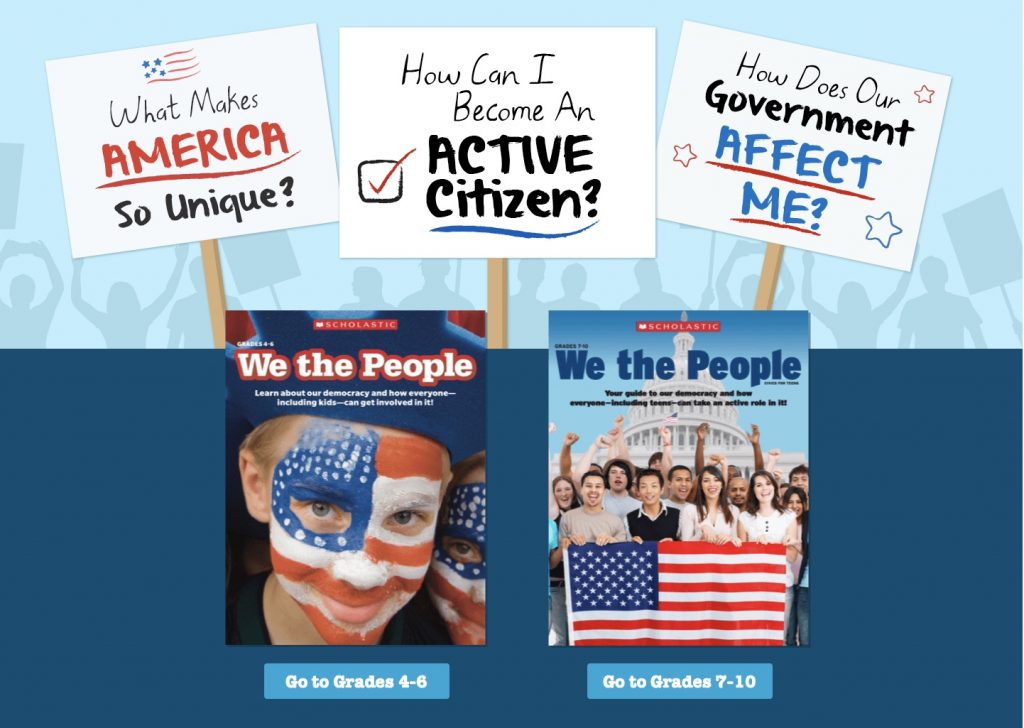 From We The People on Scholastic.com
Related: When can your teen register to vote? Here are the rules, state by state.
4. Scholastic/We The People Scholastic's website offers some interesting general info about elections for kids by age (grades 4-6 and grades 7-10), as well as lesson plans that parents can tap into. For older kids, don't miss the media literacy and understanding government content, which include topics like The Real Dal on Fake News, Supreme Court Cases Every Teen Should Know, and 10 sample questions from the US citizenship test (above).
I also have it on good authority that they are going to be adding some more incredible content any day now, so we will keep you posted on that.
5. PBS Thirteen Election Central: Leave it to PBS to put together a stellar "Election Collection" including info on campaigns, the Party system, voting rights, media literacy, current issues and debate toolkits. While it's made for educators, parents will love that there is so much here! Be sure to take a look at the KQED Youth Media Challenge: Let's Talk About Election 2020 and the interactive Electoral Decoder.
While you're there, also look at some of the related videos; I love the video on confirmation bias and why your brain is designed to love fake news.
6. For comparing platforms, Reuters Graphic: How the candidates compare on key issues is one of the cleanest, most concise graphics I've found, making it perfect for kids.
One big caveat though: It's entirely missing key issues for voters like LGBTQ+ equality, women's access to healthcare, college loan forgiveness, hate crime legislation, Supreme Court appointments, and gun law reform -- the latter of which is of particular interest to students growing up in an age of lockdown drills. However the comparison chart does cover issues often missing in other similar tools, like reparations, support for HBCUs, and specific green investment proposals.
7. For another option, check out The National Education Association Issue Comparison Tool which is excellent, though not at all unbiased. (Full disclosure: There is a "join Educators for Joe" form at the bottom.) However the page does offer concise, helpful comparisons of the two candidates' positions on issues that may be of interest to kids, like public school funding, school safety, racial/social justice, and Covid-related school re-opening proposals -- topics most kids will find more interesting than say, corporate tax code changes or foreign trade regulations.
The positions listed here on both sides are well-sourced, and allow you to click through to other trusted media resources for more info, including Vote Smart, Reuters, The NY Times, The Washington Post, Vox, and official White House statements.
Keep in mind, there are other comparison tools that may be more comprehensive, but they tend to be more wonky than most kids need.
8. While the incumbent's positions are generally pretty well-known after four years, for more information on Democratic challenger Vice President Joe Biden's platform and vision, his own website offers plenty of helpful info kids who want to dig deeper. In fact, a lot of adults should probably give it a read as well, since policy doesn't get nearly enough media attention, with so many big new stories that seem to break every day.
Understatement of the year, I suppose.